
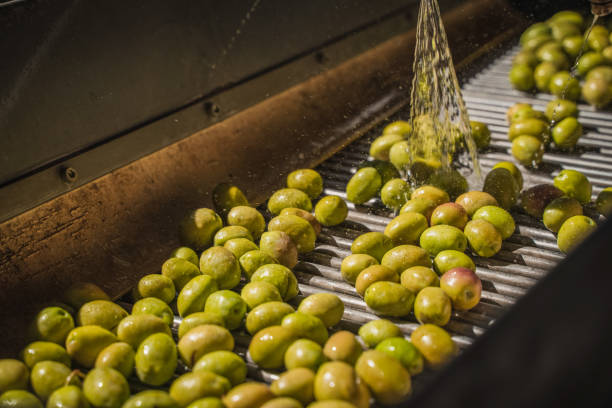
Twigs, leaves, stones and other material are removed. Depending on the mill’s procedures, the olives are then washed briefly. This prevents unwanted materials from affecting the flavour and quality of the olive oil.
Why Are the Olives Cleaned?
During harvesting, leaves, small twigs, soil and sometimes stones are often collected along with the olives. Modern olive mills first remove these using an air stream or vibrating screen. This prevents the material from damaging the equipment or imparting unwanted flavours to the oil.
Why Are the Olives Washed?
After the leaves and twigs have been removed, the olives can be washed with clean water. This removes dust, sand and other contaminants.
Washing is carried out carefully and usually takes only a short time. The olives are then processed immediately. Prolonged storage of washed olives can adversely affect the quality of the resulting olive oil.
Not every olive mill washes its olives in exactly the same way. If the olives arrive very clean, a producer may choose to limit the washing process or even omit it.
Does Washing Affect Quality?
Careful washing helps remove dirt and other contaminants from the olives. Clean wash water and good hygiene are important because contaminated wash water can cause cross-contamination.
Good to Know
Some modern olive mills use as little water as possible or operate systems in which the wash water is continuously renewed and filtered. This both saves water and improves hygiene during processing.
Sources
- International Olive Council (IOC). Quality Management Guide for the Olive Oil Industry: Olive Oil Mills
- Di Giovacchino, L. (2002). Influence of olive processing on virgin olive oil quality
- Vichi, S. et al. (2015). Quality losses in virgin olive oil due to washing and short-term storage before olive milling