
The quality of olive oil begins not in the bottle, but in the olive grove. When the olives are harvested, how they are harvested and how quickly the fruit is processed afterwards all have a major influence on the final quality of the olive oil. Careful harvesting therefore lays the foundation for high-quality extra virgin olive oil.
Why harvest timing matters
The composition of olives changes continuously as they ripen. Their oil content increases, while the amount and composition of phenolic compounds also change. Exactly how these changes develop depends partly on the olive variety. The timing of the harvest therefore affects both the oil yield and the final character of the olive oil.
There is no universally ‘perfect’ harvest time. Producers choose a time that suits the desired flavour profile, the olive variety and the conditions of that particular season.
When are olives harvested?
The harvest period varies by country, region, climate and olive variety. In warmer areas, olives may ripen earlier than in cooler regions or olive groves at higher elevations. As a result, the harvest may also begin earlier.
Even within a single olive grove, not all trees are necessarily harvested at the same time. Producers consider factors such as the ripeness of the fruit, weather conditions and the desired quality of the oil.
How are olives harvested?
Olives can be harvested in several ways.
Hand harvesting can help limit damage to the fruit, but it is labour-intensive.
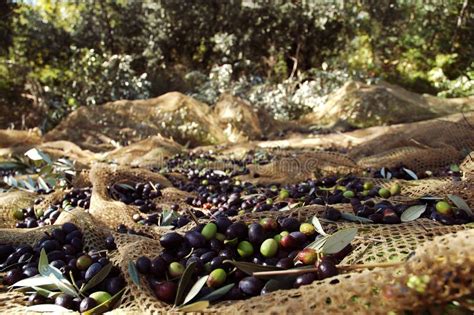
Mechanical harvesting uses trunk or branch shakers to loosen the olives. Nets or collection systems then catch the fruit. Modern mechanical techniques allow olives to be harvested quickly and can help preserve their quality, provided the fruit is handled carefully.
The chosen method depends on the shape of the trees, the terrain, the olive variety and the equipment available.
From tree to mill
After harvesting, the next important stage begins. Olives remain living fruit after they have been picked, and their quality gradually declines. Damage, heat and prolonged storage can cause unwanted fermentation and oxidation.
Producers committed to quality therefore aim to bring the olives to the olive mill as quickly as possible. Prompt and careful processing helps preserve aromas, fruitiness and other quality characteristics.
Sources
- International Olive Council (IOC). Production Techniques in Olive Growing
- Servili, M. & Montedoro, G. (2002). Contribution of Phenolic Compounds to Virgin Olive Oil Quality
- Cecchi, L. et al. (2013). Phenolic profiles, oil amount and sugar content during olive ripening of three typical Tuscan cultivars to detect the best harvesting time for oil production
- Di Vaio, C. et al. (2013). Influence of some environmental factors on drupe maturation and olive oil composition
- Brkić Bubola, K. et al. (2026). Comprehensive Assessment of Harvesting Method Effects on FAEE, Waxes, Fatty Acids, Phenolics, Volatiles, and Sensory Characteristics of Buža Virgin Olive Oil