
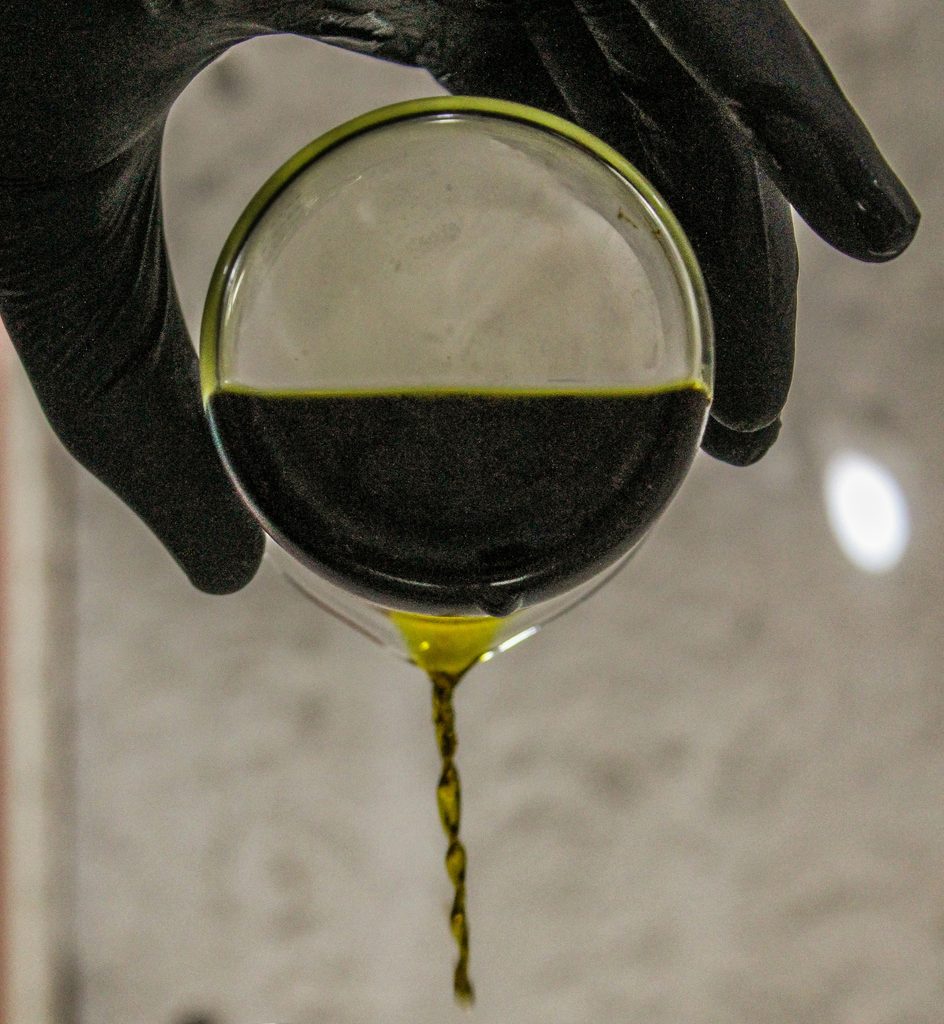
Such claims sometimes sound more certain than the scientific evidence allows. Research on olive oil includes different types of studies. Some focus on the oil itself or on individual compounds. Others examine olive oil as part of a Mediterranean dietary pattern. Their findings therefore do not always tell us what effect olive oil has on its own.
This page explains what the scientific literature shows, which conclusions are reasonable and where caution is still needed.
Not Every Study Answers the Same Question
Nutrition research can be carried out in different ways. Laboratory research may examine chemical reactions or individual substances. Animal research can help explore biological mechanisms. Research involving people examines associations or effects in the participants themselves.
There are also important differences between studies involving people. In observational research, researchers follow groups of people and record their eating habits and health. Such studies can reveal associations, but they do not necessarily prove that one thing causes another.
In randomised research, participants are assigned to different groups by chance. This allows researchers to link changes more reliably to a particular dietary intervention. Even so, these studies vary in their duration, size and design.
Some studies measure whether diseases occur, such as a heart attack or stroke. Others measure only blood values or other biomarkers. A favourable change in a laboratory value does not automatically mean that the risk of disease has also been shown to fall.
What Do We Know About Olive Oil and Cardiovascular Disease?
A substantial part of the scientific literature examines olive oil within a Mediterranean dietary pattern. This pattern generally includes plenty of vegetables, fruit, pulses, nuts and whole grains. Olive oil is used as an important source of fat.
Other studies record olive oil consumption separately. In two large American studies, participants were followed for up to 28 years. People who consumed more olive oil had, on average, a lower risk of death. The researchers could not distinguish between extra virgin and other types of olive oil in these studies. Because participants were not randomly assigned to consume a particular amount of olive oil, the association also does not show whether the olive oil itself was the cause.
In the Spanish PREDIMED study published in 2018, 7,447 people at increased risk of cardiovascular disease were divided into three groups. Two groups followed a Mediterranean dietary pattern: one received extra virgin olive oil and the other received nuts. The control group was advised to follow a low-fat diet.
Fewer heart attacks, strokes and deaths from cardiovascular disease occurred overall in the Mediterranean diet groups. However, the study does not show that this result can be attributed solely to olive oil. The participants changed several aspects of their diet, and one of the groups received nuts.
The Spanish CORDIOPREV study published in 2022 also compared a Mediterranean dietary pattern with a low-fat diet. Its participants already had cardiovascular disease. During several years of follow-up, fewer further cardiovascular events occurred in the Mediterranean diet group.
Together, these studies provide good reasons to include olive oil in a healthy dietary pattern. They do not establish precisely what effect olive oil has on its own, or what happens when someone simply adds more olive oil to an otherwise unchanged diet.
More Than Diet Alone
The Mediterranean way of life involves more than a choice of foods. Eating together, taking time over meals, cooking for yourself, being physically active and getting enough rest are also mentioned. Recent research has examined the social side of eating. An international study published in 2026, for example, found a clear association between eating together more often and a greater sense of wellbeing. That does not establish that eating together caused the difference.
These cultural and social factors are not included in every nutrition study. They should therefore not be presented as a proven effect of olive oil. They do, however, provide context for the wider lifestyle of which olive oil is often a part.
Fatty Acid Composition and Cholesterol
In the Netherlands and several other European countries, butter and other solid fats have traditionally been familiar ingredients in the kitchen. Olive oil is therefore not always an obvious replacement and is sometimes used mainly for salads or Mediterranean dishes. From a nutritional point of view, what matters is which fat it replaces. If you use olive oil instead of butter or another source of saturated fat, you replace some saturated fat with unsaturated fat. Simply adding extra olive oil without replacing anything is a different change.
Olive oil consists largely of oleic acid, a monounsaturated fatty acid. Replacing saturated fats with unsaturated fats contributes to the maintenance of normal blood cholesterol levels.
A health claim about replacing saturated fats with unsaturated fats is authorised in the European Union. It is therefore not a claim about simply adding extra olive oil to what you already eat.
This does not mean that using as much olive oil as possible is automatically better. Its role depends on what the oil replaces in the diet and how much energy a person consumes overall.
What Do We Know About Phenolic Compounds?
Alongside fatty acids, extra virgin olive oil contains phenolic compounds. These natural substances help protect the oil against oxidation, and some contribute to its bitterness and pungency.
The EUROLIVE study published in 2006 compared olive oils with different amounts of phenolic compounds. Later research built on this work. A 2023 systematic review and meta-analysis of eight randomised studies found, among other things, less oxidised LDL in the blood with olive oil containing more phenolic compounds. However, not all the blood values examined showed a clear difference.
This is relevant, but the research does not show that an oil containing more phenolic compounds directly prevents disease in every person who uses it. The studies mainly measured changes in blood values.
A specific health claim for olive oil polyphenols is authorised in the European Union. The official claim states that olive oil polyphenols contribute to the protection of blood lipids from oxidative stress. In simpler terms, these compounds help protect fats in the blood against harmful changes caused by oxygen. The claim may only be used for oil containing at least 5 milligrams of hydroxytyrosol and its derivatives per 20 grams of olive oil. It must also state that the beneficial effect is obtained with a daily intake of 20 grams of olive oil. This is not a general recommendation that everyone should consume 20 grams a day.
What Do We Know About Inflammatory Processes?
Inflammation does not only mean an acute reaction, for example following an infection or injury. Researchers also study persistent, low-grade inflammatory responses that are associated with certain chronic conditions.
Recent research suggests that extra virgin olive oil may affect certain markers of inflammation in the blood. A 2026 systematic review and meta-analysis found favourable changes in some of these markers, but not in all those examined. The certainty of the evidence also varied between outcomes.
One substance studied in this context is oleocanthal, a phenolic compound in virgin olive oil associated with the peppery sensation in the throat. Laboratory research found that oleocanthal, like ibuprofen, can inhibit COX-1 and COX-2, two enzymes involved in inflammation and pain. This points to a possible anti-inflammatory mechanism, but does not tell us how strong the effect is in people.
Part of the reason for this caution is that the studies differ in their number of participants, duration, type and amount of olive oil used, and the participants’ overall diets. There are indications that extra virgin olive oil may influence certain inflammatory processes, but this does not mean that olive oil can be regarded as an anti-inflammatory medicine.
What Else Do We Know About Olive Oil and Health?
Olive oil is also studied in relation to type 2 diabetes, cognitive decline and various types of cancer. The findings differ between conditions, as does the strength of the evidence.
A 2026 systematic review and meta-analysis of 51 randomised studies examined type 2 diabetes. Overall, it found no clear effect of olive oil on blood glucose, insulin or HbA1c. Favourable results were found for one measure of insulin resistance at certain amounts of olive oil. The researchers emphasised that further research is needed to establish what this means in practice.
New research is trying to measure differences between types of extra virgin olive oil more precisely. In the ongoing DiAOVE study, people with type 2 diabetes replace their usual cooking oil with extra virgin olive oil containing either high or low amounts of the phenolic compounds oleocanthal and oleacein. Researchers are comparing changes in HbA1c, a measure of blood glucose over a longer period, among other outcomes. No results have been published yet.
Research is also being conducted into cognitive decline. A 2026 systematic review and meta-analysis of five clinical studies involving 747 older participants with mild cognitive impairment or dementia found indications of improved cognitive function with extra virgin olive oil consumption. However, the certainty of the evidence was low, and the researchers consider the findings preliminary.
The use of olive oil is also being studied in relation to various types of cancer. Some studies show favourable associations, but the findings are not consistent. A broad meta-analysis of studies that followed people over longer periods found no clear association between the amount of olive oil consumed and the overall risk of cancer, for example.
In the same analysis, higher olive oil consumption was associated with a lower risk of cardiovascular disease and type 2 diabetes, and with a lower risk of death from all causes. Olive oil can therefore have a valuable place in a healthy dietary pattern without attributing effects to it that have not been demonstrated.
How Much Olive Oil per Day?
There is no general guideline prescribing how much olive oil a person should consume each day. Studies use a wide range of amounts. Olive oil can be an important source of fat within a Mediterranean dietary pattern, but how much is appropriate depends, among other things, on a person’s overall diet and energy needs.
The 20 grams of olive oil per day mentioned earlier is part of the conditions for the European health claim concerning olive oil polyphenols. It does not mean that everyone should consume 20 grams of olive oil every day.
Like other fats, olive oil provides a lot of energy. It therefore matters whether you use olive oil instead of butter or another source of saturated fat, or add it to what you already eat. The amount of olive oil is not the only consideration; what it replaces matters too.
What Can We Conclude?
The scientific literature supports the use of olive oil, particularly extra virgin olive oil, as part of a balanced Mediterranean dietary pattern.
Its fatty acid composition makes olive oil a good choice to replace foods high in saturated fat. Extra virgin olive oil also contains phenolic compounds. Health claims are authorised in the European Union for certain effects of these compounds when the relevant conditions are met.
Olive oil is not a medicine and cannot guarantee protection against disease. Health depends on much more than a single food: the rest of the diet and other lifestyle habits also play a role. The scientific literature nevertheless gives good reasons to include olive oil in a varied, balanced diet. Beyond these health considerations, olive oil remains, above all, an ingredient that adds flavour to many dishes.
Sources
- Estruch, R., Ros, E. et al. (2018). Primary Prevention of Cardiovascular Disease with a Mediterranean Diet Supplemented with Extra-Virgin Olive Oil or Nuts
- Delgado-Lista, J., Alcala-Diaz, J.F. et al. (2022). Long-term Secondary Prevention of Cardiovascular Disease with a Mediterranean Diet and a Low-fat Diet: The CORDIOPREV Randomised Controlled Trial
- Covas, M.I., Nyyssönen, K. et al. (2006). The Effect of Polyphenols in Olive Oil on Heart Disease Risk Factors: A Randomized Trial
- Derakhshandeh-Rishehri, S.M., Kazemi, A. et al. (2023). Effect of Olive Oil Phenols on Oxidative Stress Biomarkers: A Systematic Review and Dose-Response Meta-analysis of Randomized Clinical Trials
- Vidal Damasceno, J., Garcez, A. et al. (2026). Effects of Daily Extra Virgin Olive Oil Consumption on Biomarkers of Inflammation and Oxidative Stress: A Systematic Review and Meta-analysis
- Takhttavous, A., Rostampour, K. et al. (2026). The Effect of Different Types of Olive Oil on Glucose Control and Insulin Sensitivity: A GRADE-Assessed Systematic Review and Dose-Response Meta-Analysis of 51 Randomized Controlled Trials
- Simão, V.C., Prudente, T.P. et al. (2026). Effect of Extra Virgin Olive Oil on Mild Cognitive Impairment and Dementia in Older Adults: A Systematic Review and Meta-analysis of Clinical Trials
- Martínez-González, M.A., Sayón-Orea, C. et al. (2022). Effect of Olive Oil Consumption on Cardiovascular Disease, Cancer, Type 2 Diabetes, and All-cause Mortality: A Systematic Review and Meta-analysis
- De Neve, J.E., Dugan, A. et al. (2026). Sharing Meals Is Associated with Greater Wellbeing
- European Food Safety Authority. (2011). Scientific Opinion on the Substantiation of Health Claims Related to Polyphenols in Olive
- European Commission. (2012). Commission Regulation (EU) No 432/2012 Establishing a List of Permitted Health Claims Made on Foods
- Peyrot des Gachons, C. et al. (2011). Unusual pungency from extra-virgin olive oil is attributable to restricted spatial expression of the receptor of oleocanthal
- Beauchamp, G.K. et al. (2005). Phytochemistry: ibuprofen-like activity in extra-virgin olive oil
- Guasch-Ferré, M., Li, Y. et al. (2022). Consumption of Olive Oil and Risk of Total and Cause-Specific Mortality Among U.S. Adults
- ISRCTN. (2026). DiAOVE: Effect of Oleocanthal- and Oleacein-Rich Extra Virgin Olive Oil on Blood Glucose and Metabolic Control in People With Type 2 Diabetes