
Careful handling remains important at this stage. Olive oil is affected by light, oxygen, heat and time. Proper storage helps preserve its quality, aroma and flavour for as long as possible.
How is olive oil stored?
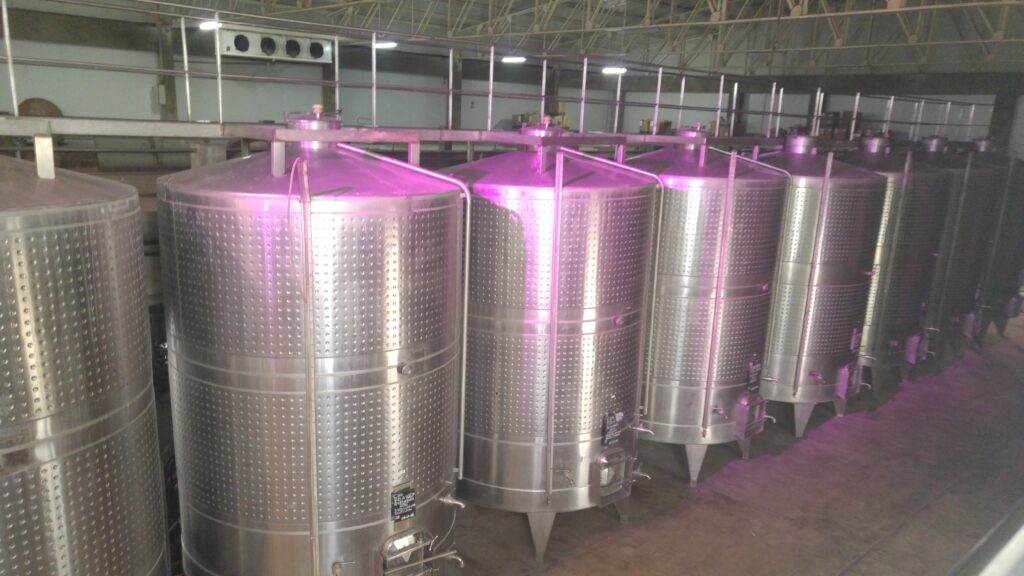
Professional producers usually store extra virgin olive oil in large stainless-steel tanks. These are easy to clean and do not react with the oil. The tanks are sealed as effectively as possible to limit contact with oxygen. The space above the oil can also be filled with a gas, such as nitrogen or argon, providing the oil with additional protection against oxygen.
Why is storage so important?
Even after olive oil has been produced, chemical changes continue slowly. Its quality gradually changes over time. Exposure to light, heat and oxygen can speed up these processes. Cool, dark storage and as little contact with oxygen as possible help preserve the oil’s quality for longer.
What does this mean at home?
The same factors matter once the bottle has been opened. Keep olive oil tightly sealed in a cool, dark place, away from sources of heat such as the stove. For the same reason, a windowsill is not a suitable place to store it. Dark glass and opaque packaging, such as a tin, help protect the oil from light.
Once the bottle has been opened, more air enters as the oil is used, which can cause it to oxidise more quickly. It is therefore best to choose a bottle or tin in a size that you will use within a few weeks to a few months.
More about choosing and storing olive oil →
Sources
- International Olive Council (IOC). (2018). Best Practice Guidelines for the Storage of Olive Oils and Olive-Pomace Oils for Human Consumption
- Guillaume, C. & Ravetti, L. (2016). Shelf-Life Prediction of Extra Virgin Olive Oils Using an Empirical Model Based on Standard Quality Tests
- UC Food Quality, University of California, Davis. (2025). Olive Oil Myths and Facts