
The quality of olives gradually declines after they have been picked. Rapid and careful transport to the olive mill is therefore essential for preserving flavour, aroma and quality.
Why Speed Matters
After harvesting, natural processes continue within the olive. Damaged fruit and prolonged storage can lead to unwanted fermentation and oxidation. This can cause aroma and flavour defects that cannot be corrected later.
The sooner healthy olives are processed, the greater the chance that their characteristic aromas, fruitiness and quality will be preserved. Quality-focused producers therefore aim to transport the olives to the mill and process them as quickly as possible.
How Are Olives Transported?
Olives are preferably transported in perforated plastic crates. These provide sufficient ventilation and prevent the fruit from being crushed under its own weight. Traditional jute sacks or large closed bags are avoided as much as possible by quality-focused producers because heat and moisture can build up inside them.
During transport, the olives are also protected from direct sunlight and high temperatures. This also helps to preserve the quality of the fruit as effectively as possible.
Arrival at the Olive Mill
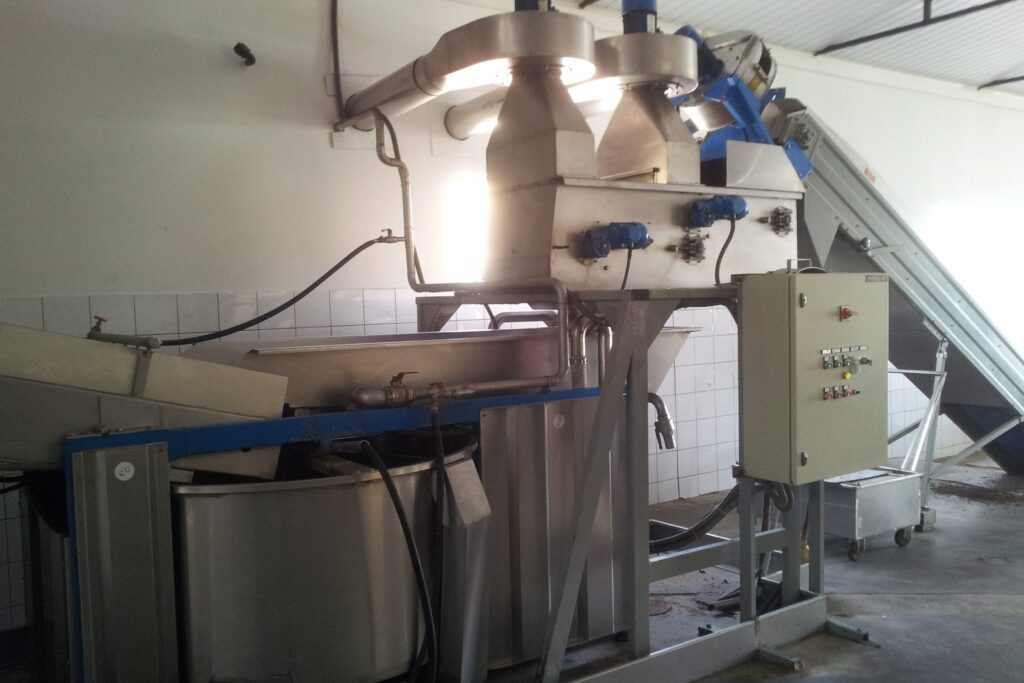
On arrival, the olives are usually weighed and registered first. The mill then checks the quality of the delivered batch. Twigs, leaves and other coarse material are removed before the olives are processed further.
Only then does the actual production process begin with washing the olives.
Why Not All Olives Are Processed Equally Quickly
Although many producers aim to process their olives quickly, this is not always possible. During busy harvesting periods, olive mills may receive large quantities of olives. Modern quality-focused mills try to keep waiting times as short as possible and store the fruit under suitable conditions until it can be processed.
Careful planning and efficient logistics help to preserve the quality of the olives as effectively as possible.
Sources
- International Olive Council (IOC). Production Techniques in Olive Growing
- International Olive Council (IOC). Quality Management Guide for the Olive Oil Industry: Olive Oil Mills
- Rotondi, A. et al. (2021). Effect of Duration of Olive Storage on Chemical and Sensory Quality of Extra Virgin Olive Oils